
Winter slips and falls: what to do first for orthopaedic urgent care
The winter brings a lot of "just one more thing," one more trip up the stairs, one more icy sidewalk, one more box to carry. Then a slip happens.
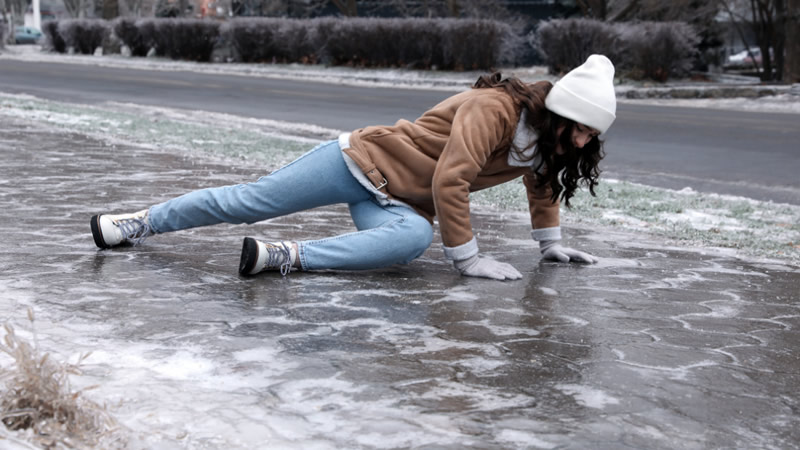 If you or someone you love takes a fall, orthopaedic urgent care is often the simplest next step for new bone, joint, and muscle injuries. The goal is not to panic. The goal is to protect the injury, avoid making it worse, and get a clear plan so you can heal and get back to life.
Here is the easy, step-by-step playbook.
Step 1: Stop, sit, and take a breath
Right after a fall, adrenaline can trick you. You might feel "okay" for a few minutes, then pain and swelling hit fast.
Do this first:
- Stop moving and get to a safe place.
- Sit down if you can.
- Check for obvious deformity (a limb that looks crooked or "out of place").
- Wiggle fingers and toes to see if you can move them.
- Notice numbness or tingling, which can be a sign something needs attention sooner.
If you are unsure, assume it is more serious and get evaluated.
Step 2: Decide, ER or orthopaedic urgent care?
Here is a simple rule.
If it is a bone, joint, or muscle injury, orthopaedic urgent care is often the right first stop.
If it is a significant wound, burn, bite, deformity, or a severe open fracture, go to the ER.
Columbia Orthopaedic Group's Orthopaedic Urgent Care Hub (OUCH) is designed for injuries such as new bone, joint, or muscle injuries; sprains and strains; possible dislocations; swollen joints; possible fractures; sports injuries; and work injuries.
OUCH recommends the ER for animal bites, burns, cuts and other wounds, and fractures with bone protrusion or deformity.
Go to the ER now (or call 911) if you have:
- Bone sticking out of the skin, or a deep open wound
- Heavy bleeding that will not stop
- Head injury with confusion, vomiting, fainting, or severe headache
- Chest pain or trouble breathing
- A fall from a height with severe pain, especially in the neck or back
If none of those apply, keep reading.
Step 3: Protect the injury the right way (the first 24 to 48 hours)
Your first job is to reduce swelling and prevent further damage.
The quick checklist
- Rest: Avoid "testing it" over and over. Every test is more irritation.
- Ice: 15 to 20 minutes at a time, a few times a day. Put a cloth between ice and skin.
- Compression: A snug wrap can help swelling (not so tight it causes numbness).
- Elevation: Raise it above heart level whenever possible.
If you suspect a fracture or dislocation:
- Do not try to "pop it back in."
- Immobilise it with a splint or even a folded towel and tape.
- Remove rings from fingers after hand injuries, swelling can trap them.
Pain relief, keep it safe
Over-the-counter medications can help, but use them as directed on the label and avoid mixing products that share the same ingredients. If you take blood thinners, have kidney disease, stomach ulcers, or other medical conditions, check with your clinician or pharmacist first.
Step 4: Know the "red flags" that mean you should be seen today
A lot of winter injuries can wait until the next day. Some should not.
Try not to "sleep it off" if you have:
- Rapid swelling, especially around a joint
- Pain that is severe or getting worse
- Inability to bear weight
- Numbness, tingling, or weakness
- A joint that looks out of place
- A "pop" followed by immediate instability (common with some knee, ankle, or shoulder injuries)
If any of those are happening, getting evaluated promptly can reduce complications and speed up your recovery.
Step 5: What orthopaedic urgent care can do for you, fast
The benefit of orthopaedic urgent care is an orthopaedic focus. Instead of bouncing between places, you can often get the right evaluation and next steps in one visit.
At OUCH, you can walk in and be seen during posted hours. From there, our team guides you to the next best step for your injury, including access to our on-site physical therapy clinic, which can often be used the same day.
OUCH hours and contact information:
- Monday to Friday: 7am to 6pm
- Saturday: 8am to 12pm
- Phone: (573) 443-2402
- Location: 1 South Keene Street, Columbia, Missouri 65201
Because COG has been caring for Mid-Missouri for more than 60 years, the goal is not just to "patch you up." It is to give you a clear plan that helps you heal well and get back to what matters: work, family, sports, and everyday life. Our goal is always to keep "Moving you forward."
Step 6: How to get ready before you walk in
A few small steps can make your visit smoother:
- Bring your ID and insurance card
- Wear or bring loose clothing (shorts for a knee injury, a tank top for shoulder pain)
- If you can, write down:
- When it happened
- What you felt (pop, twist, direct impact)
- What makes it worse or better
- If it is a work injury, mention it at check-in
And if you are in a lot of pain, ask a friend or family member to drive you.
Common winter slip and fall injuries we see
Every fall is different, but these show up a lot this time of year:
- Ankle sprains: rolling the ankle on uneven ground or icy steps
- Wrist injuries: catching yourself with your hands during a fall
- Knee injuries: twisting while slipping or stepping off a curb
- Shoulder injuries: landing on the side, or falling with an outstretched arm
- Hip pain: especially after a hard fall, particularly in older adults
Even when something "feels minor," it's worth checking, especially if pain persists beyond a day or two.
A quick word for parents: kids can be tough, but still need checks
Kids often bounce up fast. That is great, but it can hide injuries.
Consider an evaluation if your child:
- Refuses to use an arm or leg
- Has swelling that keeps increasing
- Cannot return to normal activity within 24 hours
- Wakes up at night from pain
Prevention, three easy ways to lower your risk this season
No one wants a winter injury (especially during the holidays), so here are simple habits that work:
- Use the handrail even if you feel silly
- Take smaller steps on ice, think "penguin walk"
- Wear shoes with grip when heading outside, even "just for a second"
FAQ: orthopaedic urgent care, quick answers
Is orthopaedic urgent care the same as the ER?
No. The ER is built for life-threatening emergencies. Orthopaedic urgent care is focused on bones, joints, and muscles, and it is often the faster path when the injury is clearly orthopaedic.
Do I need an appointment for orthopaedic urgent care at COG?
OUCH is a walk-in clinic, designed to see you during posted hours.
What injuries are best for orthopaedic urgent care?
New injuries like sprains, strains, possible fractures, swollen joints, sports injuries, work injuries, and possible dislocations are common reasons people choose orthopaedic urgent care.
When should I choose the ER instead?
Columbia Orthopaedic Group recommends the ER for issues like animal bites, burns, cuts and other wounds, and fractures with bone protrusion, and you should always choose the ER for severe symptoms like heavy bleeding, serious head injury symptoms, or breathing problems.
What are OUCH hours and how do I reach you?
OUCH is open Monday to Friday 7am to 6pm and Saturday 8am to 12pm. Phone: (573) 443-2402.
CTA: If you slip or fall, do not wait in pain
If you have a new bone, joint, or muscle injury and are not sure what to do next, walk into Columbia Orthopaedic Group's orthopaedic urgent care for clear answers.
Orthopaedic Urgent Care Hub (OUCH):https://www.columbiaorthogroup.com/ouch/
This article is general information, not a diagnosis. If you think you have a serious injury or emergency symptoms, seek emergency care right away.
Sources:
- Columbia Orthopaedic Group, Orthopaedic Urgent Care Hub (OUCH): https://www.columbiaorthogroup.com/ouch/
- Columbia Orthopaedic Group, Main site contact details: https://www.columbiaorthogroup.com/
- Mayo Clinic, Sprained ankle, diagnosis and treatment (icing interval guidance): https://www.mayoclinic.org/diseases-conditions/sprained-ankle/diagnosis-treatment/drc-20353231
- Mayo Clinic, Sprain first aid (RICE overview): https://www.mayoclinic.org/first-aid/first-aid-sprain/basics/art-20056622
- AAOS OrthoInfo, Sprains, Strains & Other Soft-Tissue Injuries: https://orthoinfo.aaos.org/en/diseases--conditions/sprains-strains-and-other-soft-tissue-injuries/
- Cleveland Clinic, RICE Method: https://my.clevelandclinic.org/health/treatments/rice-method